

Why Your Google Ads Aren’t Getting Clicks — and How to Fix It
Introduction
You’ve meticulously crafted your Google Ads campaigns, diligently selected keywords, and set your budget. Yet, the clicks are frustratingly low. This is a common scenario for many businesses venturing into the world of paid online advertising. A low click-through rate (CTR) not only means wasted ad spend but also missed opportunities to connect with potential customers. Understanding why your ads aren’t attracting clicks is the first crucial step towards improving their performance and achieving your marketing goals. This blog post will delve into the most frequent reasons behind lackluster Google Ads CTR and provide actionable strategies to diagnose and rectify these issues, ultimately driving more qualified traffic to your website.
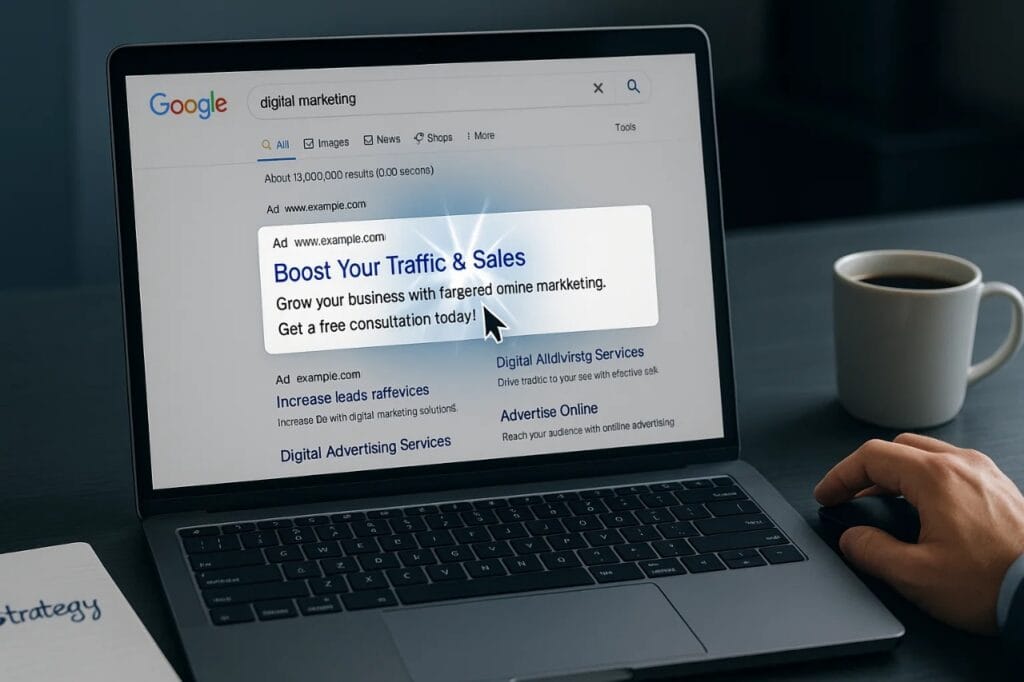
Common Mistake #1: Poor Ad Headlines
Your ad headline is the first, and often the only, impression you make on potential customers in the crowded search engine results page (SERP). A poorly written headline fails to capture attention, convey value, or entice users to click. Generic phrases, lack of clear benefits, and neglecting to include relevant keywords are common culprits.
Table 1: Examples of Poor vs. Effective Ad Headlines
| Poor Headline | Effective Headline | Why it’s Better |
| Our Product | Premium Leather Wallets – Shop Now! | Includes relevant keywords and a clear call to action. |
| Best Prices Available | Save 20% on Durable Backpacks – Limited Time Offer | Highlights a specific benefit and creates a sense of urgency. |
| Click Here to Learn More | Discover the Best Digital Marketing Agency | Clearly states the service offered and targets a specific audience. |
| High-Quality Services | Expert AC Repair in Lahore – Fast & Reliable | Includes location specificity and emphasizes key service attributes. |
Export to Sheets
A compelling headline should be concise, incorporate relevant keywords that users are actively searching for, clearly state the benefit or value proposition, and ideally include a strong call to action. Avoid vague language and focus on addressing the user’s potential needs or pain points directly in your headline.
Mistake #2: Irrelevant Keywords
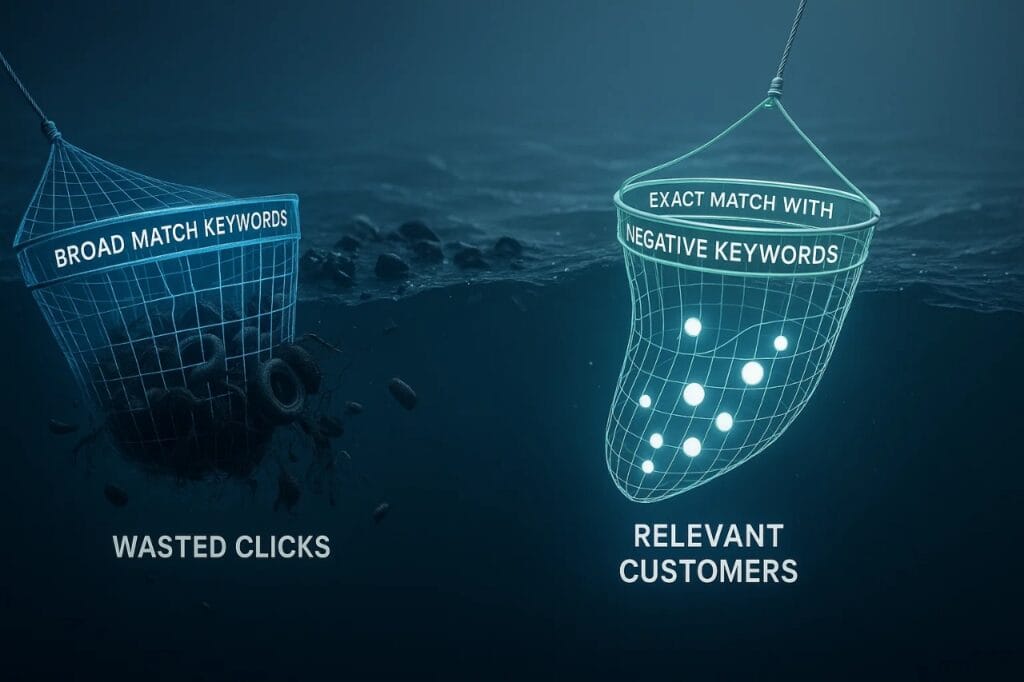
Keywords are the foundation of your Google Ads campaigns, determining when and where your ads appear. Targeting irrelevant keywords is a surefire way to attract the wrong audience, leading to low CTR and wasted ad spend. This can happen due to broad keyword matching, misunderstanding user intent, or simply not conducting thorough keyword research.
Imagine you’re selling high-end coffee beans. If you’re broadly targeting keywords like “coffee,” your ads might appear for searches related to instant coffee, coffee mugs, or even coffee shops. These users are unlikely to be interested in purchasing premium beans online.
Table 2: Impact of Keyword Match Types on Relevance
| Match Type | How it Works | Potential for Irrelevance | Example (Keyword: running shoes) |
| Broad Match | Ads may show for searches that include misspellings, synonyms, related searches, and other relevant variations. | High | running gear, best sneakers, marathon training |
| Phrase Match | Ads may show for searches that include the exact phrase, or close variations of that exact phrase, with additional words before or after. | Medium | buy running shoes online, cheap running shoes for men |
| Exact Match | Ads may show for searches that are an exact match of your keyword, or close variants of that exact match. | Low | running shoes |
| Negative Keywords | Prevent your ads from showing for specific terms. | N/A | -used running shoes, -trail running shoes |
Implementing negative keywords is crucial for refining your targeting and preventing your ads from appearing for irrelevant searches. Regularly review your search terms report to identify and exclude non-performing or unrelated keywords.
Mistake #3: Weak Landing Pages
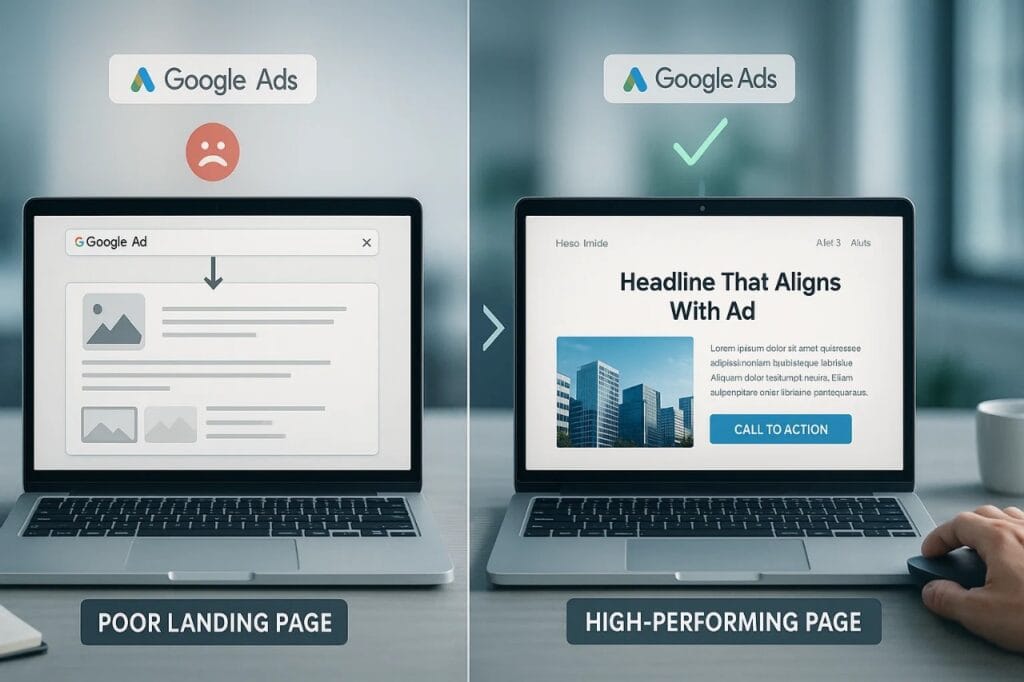
You’ve managed to entice a click, but the journey doesn’t end there. A weak or irrelevant landing page can quickly lead to bounces and conversions lost. Your landing page should be a seamless extension of your ad, delivering on the promise made in your headline and providing a clear path to conversion.
Common landing page mistakes include:
- Lack of relevance: The landing page content doesn’t directly relate to the ad that the user clicked.
- Poor user experience: Difficult navigation, slow loading times, and a cluttered design can frustrate visitors.
- Missing or unclear call to action: Users aren’t sure what you want them to do next (e.g., purchase, sign up, contact).
- Insufficient information: The page doesn’t provide the details users need to make an informed decision.
- Not mobile-friendly: In today’s mobile-first world, a non-responsive landing page is a major deterrent.
Table 3: Elements of an Effective Landing Page
| Element | Description | Benefit |
| Clear Headline | Matches or closely aligns with the ad headline. | Reinforces relevance and builds trust. |
| Compelling Content | Provides relevant information and highlights benefits. | Addresses user needs and encourages engagement. |
| Strong Call to Action | Clearly instructs users on the desired next step. | Guides users towards conversion. |
| High-Quality Visuals | Relevant images or videos that support your message. | Enhances understanding and visual appeal. |
| Trust Signals | Testimonials, reviews, security badges, guarantees. | Builds credibility and reduces user hesitation. |
| Mobile Responsiveness | Adapts seamlessly to different screen sizes. | Ensures a positive experience for all users. |
Ensure your landing pages are optimized for the specific keywords and ad groups they are associated with. Provide a clear and concise message, a seamless user experience, and a prominent call to action to maximize conversions from your clicks.
How to Improve Click-Through Rate (CTR)
Improving your Google Ads CTR requires a strategic and iterative approach. Here are key strategies to implement:
- Refine Your Keyword Strategy: Conduct thorough keyword research to identify highly relevant and specific keywords. Utilize different match types strategically and consistently add negative keywords to eliminate irrelevant traffic. Analyze your search terms report regularly to identify new negative keywords and potential keyword expansions.
- Craft Compelling Ad Copy: Write clear, concise, and benefit-driven ad headlines and descriptions. Incorporate relevant keywords naturally. Highlight unique selling propositions (USPs) and include strong calls to action. Experiment with different ad copy variations to see what resonates best with your target audience.
- Optimize Your Ad Extensions: Utilize all relevant ad extensions, such as sitelink extensions, callout extensions, structured snippet extensions, and call extensions. These extensions provide additional information and visibility, making your ads more prominent and increasing the likelihood of clicks.
- Target the Right Audience: Leverage Google Ads targeting options to reach your ideal customers. Refine your targeting based on demographics, location, interests, and behaviors. Consider using remarketing lists to re-engage users who have previously interacted with your website.
- Improve Your Quality Score: Google’s Quality Score is a metric that reflects the overall quality of your ads and landing pages. A higher Quality Score can lead to better ad positions at lower costs. Focus on improving your expected CTR, ad relevance, and landing page experience to boost your Quality Score.
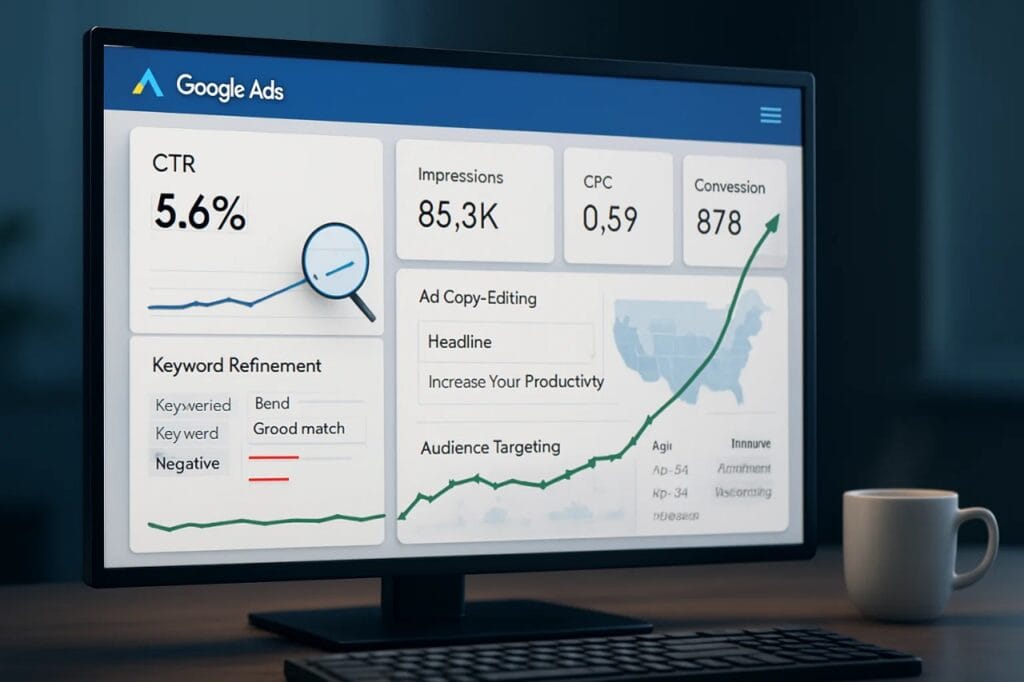
- Analyze and Iterate: Regularly monitor your campaign performance data, paying close attention to CTR, impressions, and conversions. Identify underperforming keywords and ads, and make necessary adjustments based on the data. Continuous testing and optimization are crucial for long-term success.
Table 4: Strategies to Improve Google Ads CTR
| Strategy | Description | Benefit |
| Keyword Refinement | Focus on specific, relevant keywords and use negative keywords. | Attracts a more qualified audience and reduces wasted ad spend. |
| Compelling Ad Copy | Write benefit-driven headlines and descriptions with clear calls to action. | Increases ad visibility and encourages users to click. |
| Utilize Ad Extensions | Add relevant sitelinks, callouts, snippets, and other extensions. | Provides more information and makes your ads more prominent in the search results. |
| Audience Targeting | Narrow down your audience based on demographics, interests, and behaviors. | Reaches the users most likely to be interested in your offerings. |
| Improve Quality Score | Enhance ad relevance, expected CTR, and landing page experience. | Can lead to better ad positions and lower costs per click. |
| Continuous Analysis & Testing | Regularly monitor performance data and experiment with different ad variations and targeting options. | Allows for ongoing optimization and identification of best-performing strategies. |
A/B Testing Techniques
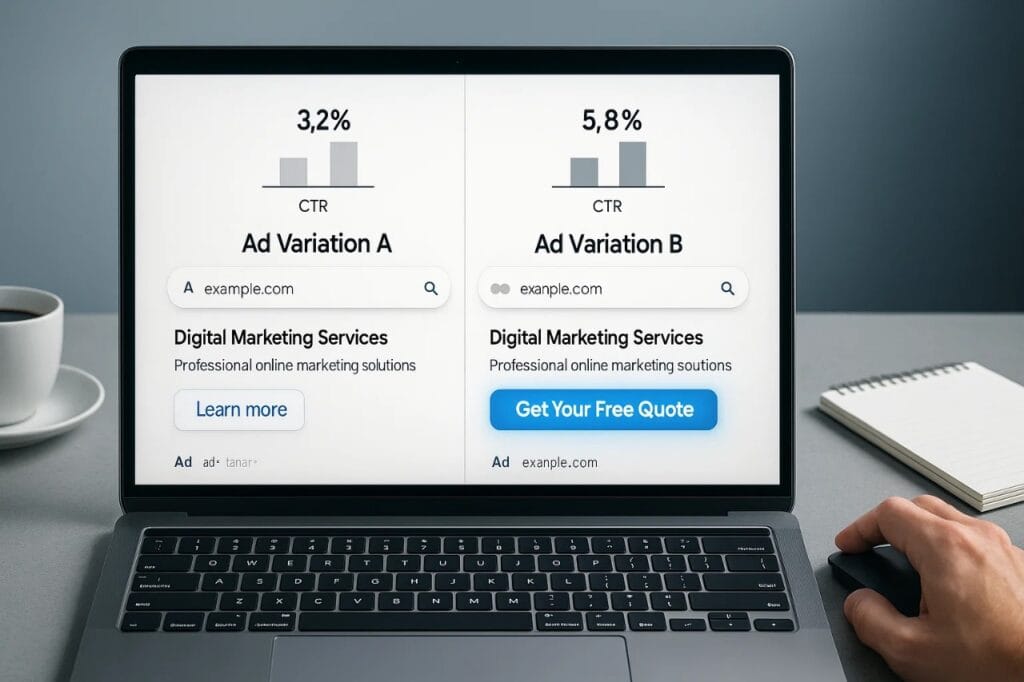
A/B testing, also known as split testing, is a crucial technique for optimizing your Google Ads campaigns. It involves creating two or more variations of an ad, landing page, or other campaign element and showing them to different segments of your audience to determine which performs better click here if you need services.
Here are some key elements to A/B test:
- Ad Headlines: Test different value propositions, calls to action, and keyword placements.
- Ad Descriptions: Experiment with different ways to elaborate on your offer and highlight benefits.
- Ad Extensions: Test which sitelink text or callout messages drive more clicks.
- Landing Page Headlines: See which headline resonates best with visitors arriving from specific ads.
- Landing Page Content: Test different layouts, visuals, and calls to action on your landing pages.
Table 5: Examples of A/B Tests for Google Ads
| Element Being Tested | Variation A | Variation B | Key Metric to Track |
| Ad Headline | Learn More About Our Services | Discover Our Expert Solutions | Click-Through Rate |
| Ad Description | Free Consultation Available | Schedule Your Free Consultation Today | Click-Through Rate |
| Landing Page CTA | Contact Us | Get a Free Quote | Conversion Rate |
| Sitelink Extension | Our Products | Shop Our Latest Collection | Click-Through Rate |
When conducting A/B tests, it’s essential to test one element at a time to accurately attribute performance differences. Ensure you run your tests for a sufficient period to gather statistically significant data before making any definitive conclusions or implementing changes across your entire campaign.
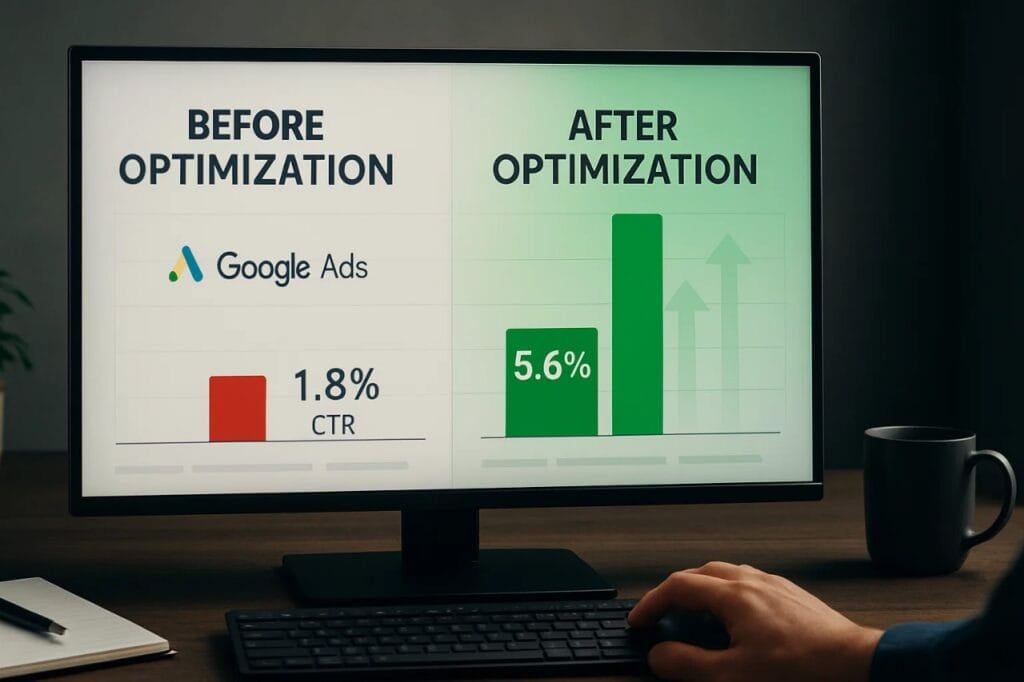
Caption: This screenshot illustrates the positive impact of optimizing ad headlines and targeting. The “Before Optimization” period shows a CTR of 2.1%, while after implementing more specific keywords and compelling ad copy, the “After Optimization” period demonstrates a significant increase to 5.8%. This improvement resulted in more qualified traffic and a better return on ad spend. Further analysis of search terms during the “Before” period revealed several irrelevant keywords that were subsequently added as negative keywords, contributing to the higher relevance and improved CTR seen in the “After” period. Consistent monitoring and iterative adjustments, as demonstrated here, are key to maximizing the effectiveness of Google Ads campaigns.
Best Practices Summary
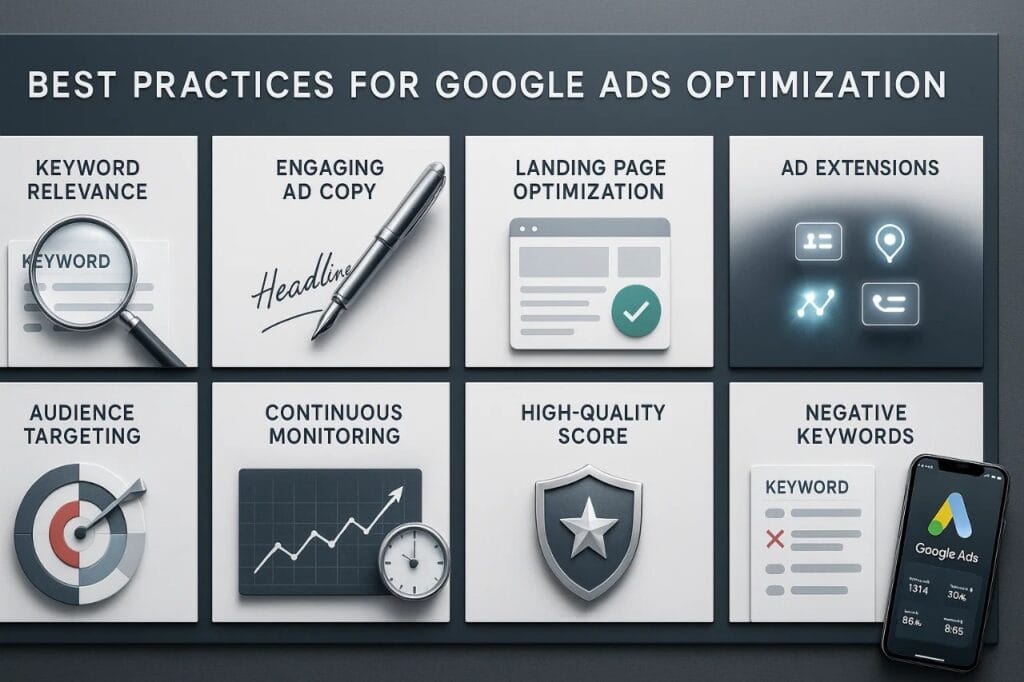
To consistently achieve a healthy click-through rate in your Google Ads campaigns, remember these best practices:
- Prioritize Keyword Relevance: Always target keywords that closely match user search intent and your offerings.
- Write Engaging Ad Copy: Craft compelling headlines and descriptions that highlight benefits and include clear calls to action.
- Optimize Your Landing Pages: Ensure your landing pages are relevant, user-friendly, and aligned with your ad message.
- Utilize Ad Extensions: Take full advantage of ad extensions to provide more information and increase ad visibility.
- Target Your Ideal Audience: Refine your targeting options to reach the most relevant potential customers.
- Continuously Monitor and Test: Regularly analyze your campaign performance and conduct A/B tests to identify areas for improvement.
- Maintain a High Quality Score: Focus on improving ad relevance, expected CTR, and landing page experience.
- Use Negative Keywords Diligently: Prevent your ads from showing for irrelevant searches.
By consistently implementing these best practices, you can significantly improve your Google Ads CTR, drive more qualified traffic to your website, and ultimately achieve your advertising goalsLooking for professional PPC help? [ppc portfolio].
Final Advice
Improving your Google Ads CTR is an ongoing process that requires attention to detail and a willingness to experiment. Don’t get discouraged by initial low performance. By systematically analyzing your campaigns, identifying areas for improvement, and implementing the strategies outlined in this blog post, you can significantly enhance your ad performance. Remember that even small improvements in CTR can lead to substantial gains in traffic, conversions, and ultimately, your return on investment. Stay data-driven, keep testing, and continuously strive to optimize your campaigns for maximum effectiveness Want to see how I deliver results? Click here to view my portfolio.